




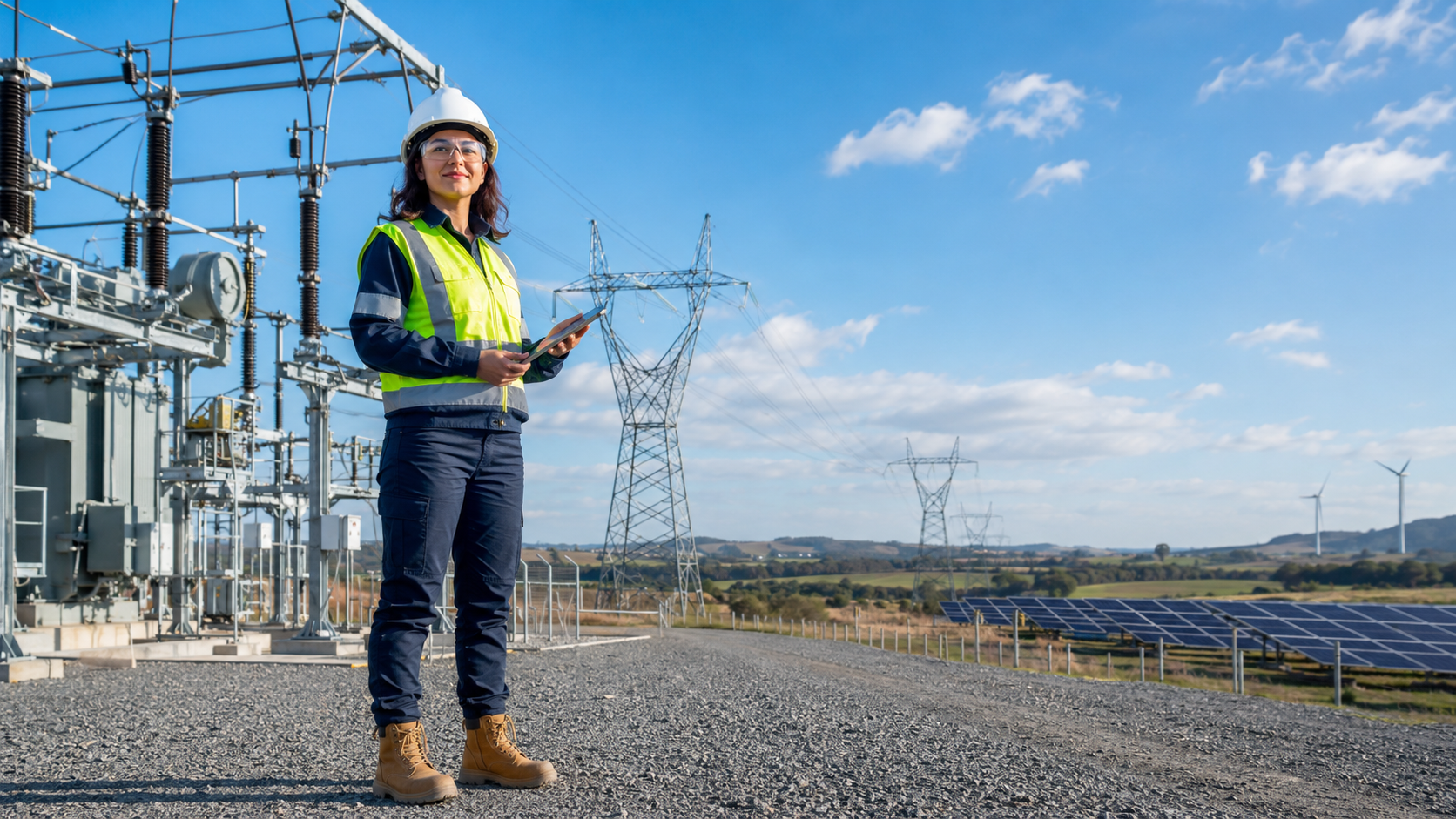
Australia’s Energy Sector Is Expanding Rapidly Australia’s energy and infrastructure sectors are entering one of the busiest periods of development the industry has seen in years. Large transmission upgrades, renewable energy projects, grid modernisation, battery storage, rail infrastructure and industrial automation are all increasing demand for electrical engineering talent across the country. At the same time, more women are building long-term careers in electrical engineering and becoming increasingly visible across technical, operational and leadership roles connected to these projects. Workforce Demand Is Reshaping the Industry While electrical engineering remains one of the least gender-balanced engineering disciplines in Australia, the industry is slowly shifting. Latest available industry data indicates women represent roughly 14 to 16 per cent of the national engineering workforce, with electrical engineering still sitting below the overall engineering average. The numbers are still relatively low, but the workforce itself is changing as demand for skilled engineers continues to grow. This shift is becoming more noticeable across areas linked directly to Australia’s energy transition. Renewable energy developments, transmission infrastructure, power distribution upgrades and digital grid systems are creating demand for engineers with both technical capability and adaptability across fast-changing technologies. Engineering Companies Are Competing for Talent For employers, the challenge is no longer only about attracting talent. It is about securing enough qualified engineers to support the scale of infrastructure and energy projects now moving through the pipeline. Across Australia, engineering companies, utilities, contractors and energy operators are competing for experienced professionals in areas such as high-voltage systems, grid integration, automation, protection systems, renewable energy delivery and infrastructure design. As workforce shortages continue affecting parts of the sector, companies are increasingly looking towards broader talent pools and more sustainable workforce development strategies. Recruitment Strategies Need to Widen the Talent Pool Skills shortages will not be solved by repeatedly competing for the same small group of active applicants. Employers can strengthen hiring outcomes by using targeted search, assessing transferable capability and engaging experienced professionals who may not be actively applying for roles. Clear role scopes, structured interviews, transparent flexibility and visible pathways into technical and project leadership can also help organisations attract and retain a broader range of candidates. Graduate programs, return-to-work pathways and early-career development remain important for building the longer-term pipeline. For hiring teams, the practical question is not only how to increase representation, but how to remove avoidable barriers while maintaining clear technical standards. A well-planned recruitment process can widen access to talent without lowering expectations. Why Representation Matters Beyond Diversity This is one reason why visibility across the profession matters. As more women enter electrical engineering and progress into technical and project leadership positions, the industry gains access to a wider range of skills, experience and long-term workforce capacity. In sectors managing large-scale infrastructure and critical power systems, workforce sustainability is becoming just as important as project delivery itself. The conversation is also becoming less focused on representation alone and more connected to the future capability of the engineering workforce. Diverse engineering teams bring broader thinking, stronger collaboration and different perspectives to complex technical challenges. In industries such as power, energy and infrastructure, where reliability, innovation and long-term planning are critical, this matters. The Future of Electrical Engineering in Australia Australia’s transition towards smarter grids, renewable integration, electrification and digitally connected infrastructure will require a significant pipeline of engineers over the coming decade. That demand is already influencing how organisations approach recruitment, graduate programs, retention and workforce planning. Electrical engineering is changing alongside the systems it supports. The industry is becoming more digital, more infrastructure-driven and more connected to renewable energy and grid resilience than ever before. As these sectors continue expanding, the engineering workforce will continue evolving with them. Women working across electrical engineering are increasingly becoming part of that future. The numbers may still be low, but the direction is clear: electrical engineering is changing, and a new generation of talent is helping move the industry forward. Suggested Website Excerpt: Australia’s electrical engineering sector is changing. As demand grows across power, grid, renewables, infrastructure and automation, more women are stepping into technical and leadership roles that are helping shape the future of the industry.
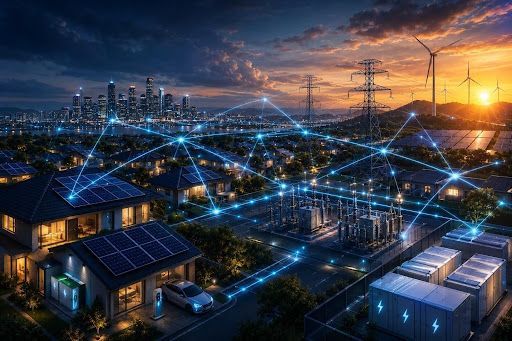
Australia Is Quietly Building the Foundations for Smarter Grids More than 4 million Australian households now have rooftop solar installed, giving Australia one of the highest rooftop solar adoption rates in the world. Our homes are no longer only consuming electricity, they are generating and feeding power back into the grid throughout the day. In addition, battery systems, EV chargers, wind farms, and large scale solar projects continue adding more pressure to ageing infrastructure originally built for one directional electricity flow. As renewable adoption accelerated and extreme weather events became more frequent, Australia started recognising how vulnerable traditional grid infrastructure had become. After the 2009 Black Saturday bushfires, utilities invested more heavily in AI powered smart grids. The Grid Has Become Much Harder To Predict To manage this growing complexity, utilities across Australia are adopting smarter infrastructure including: Predictive maintenance systems Automated substations Remote grid control Digital monitoring and grid resilience technologies For instance, companies such as Neara are using AI, predictive analytics, and digital twin technology to help utilities monitor grid infrastructure in real time. Their systems analyse asset performance, power line behaviour, vegetation risks, and network conditions to identify faults and improve outage response. Modern Smart Grids Are Digital Ecosystems Instead of waiting for outages to be reported manually, live operational data is continuously transmitted into SCADA systems, where AI analytics platforms monitor network conditions. If voltage drops or equipment starts behaving abnormally, the system can identify the fault location, isolate damaged infrastructure through automated switching, and reroute electricity before larger outages spread across the network. To support this, utilities are deploying Phasor Measurement Units (PMUs), Intelligent Electronic Devices (IEDs), and smart sensors across substations, transformers, feeders, and transmission lines. These systems continuously monitor voltage, frequency, current flow, equipment temperature, and overall network stability, giving operators far greater real time visibility across the grid than traditional infrastructure ever allowed. Communication infrastructure is a major part of what makes this possible. Fibre optic networks, wireless systems, IoT communication platforms, and real time monitoring technologies allow operational data to move across the network within milliseconds, giving utilities far greater visibility than traditional systems ever allowed. The grid is gradually starting to behave more like a live digital system than static infrastructure. The Technology Shift Is Also a Workforce Shift As power networks become more automated, connected and data-driven, the capability required to design, operate, maintain and protect them is broadening. Utilities, engineering consultancies, technology providers and contractors increasingly need professionals who can work across traditional power systems and digital environments. Relevant experience may include SCADA and control systems, protection and automation, communications, cybersecurity, data analytics, asset management, grid modelling, commissioning and field operations. The strongest candidates may not always come from a single job title; some will bring transferable experience from industrial automation, telecommunications, data centres or other critical infrastructure. What This Means for Hiring These positions can be difficult to fill because employers are often seeking a rare combination of electrical engineering knowledge, practical network experience and confidence with emerging digital tools. Clear role scoping helps separate the capabilities required on day one from those that can be developed through training and project exposure. For organisations planning smarter-grid programs, early talent mapping, succession planning and targeted search can be more effective than waiting for specialist vacancies to become urgent. A strong recruitment process should assess both technical fundamentals and the candidate’s ability to work across operational, digital and multidisciplinary interfaces. The Grid of the Future Will Still Depend on People Self-healing technologies may automate fault detection, isolation and restoration, but skilled people will remain responsible for engineering judgement, system security, safe implementation and long-term network performance. Building the workforce behind these systems is therefore as important as investing in the technology itself. Recruiting for Smarter Grid Capability? EnergySync Recruitment connects specialist talent with organisations designing, building, operating and maintaining power and electrical infrastructure across Australia and New Zealand. Contact us to discuss permanent recruitment needs across power systems, grid automation, SCADA, protection, digital networks and related disciplines.
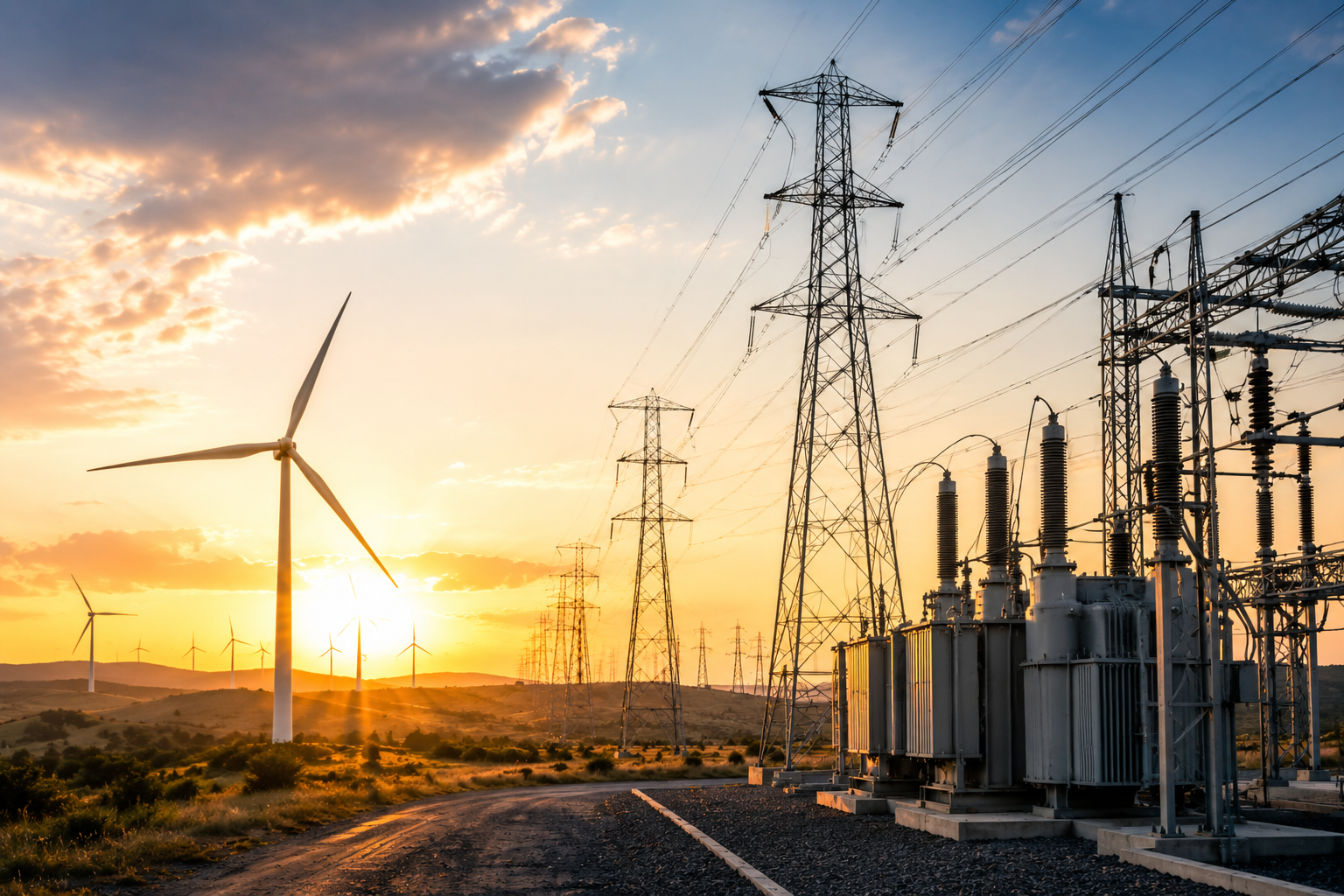
The Market Is Becoming More Infrastructure-Led Queensland’s energy market in 2026 is becoming more infrastructure- and integration-led. Wind and solar remain central to Queensland’s planned new-build pipeline, but the engineering work attracting more attention increasingly sits in the assets that connect, stabilise and enable those projects: transmission lines, substations, grid connection, system-strength services and storage. AEMO’s Draft 2026 Integrated System Plan reaffirms that renewables connected by transmission and distribution, firmed with storage and backed by gas, remain the least-cost pathway for the broader National Electricity Market, while Queensland’s 2025 Energy Roadmap forecasts up to 6.8 GW of additional wind and large-scale solar, 600 MW of additional gas-fired generation and up to 3.8 GW of storage by 2030 under the state’s current policy settings. Transmission Experience Is Starting To Carry More Weight Across regional Queensland, that shift is visible in both the project pipeline and the network build-out. According to Powerlink’s 2025 Transmission Annual Planning Report, 34 large-scale solar, wind and battery connections have been completed since 2017, and formal connection applications total 42,368 MW of new generation and storage capacity. Major programs such as the Gladstone Project, CopperString, and Powerlink’s Central Queensland system-strength works help explain why grid connection, HV systems and broader network capability are becoming more commercially relevant. Battery Storage Is No Longer Sitting On The Edge Of The Market Battery storage is now clearly part of the mainstream. Queensland’s planning framework now includes State code 27 for battery storage facility development, and battery projects of 50 MW or more must complete a social impact assessment and a community benefit agreement before a development application can be made. At the same time, projects such as Swanbank and Tarong, together with a growing statewide battery pipeline, show that storage has moved from specialist niche to core system infrastructure. The Technical Baseline Across Electrical Engineering Has Not Changed Core electrical engineering fundamentals still matter. Strong design, delivery, problem-solving and project-execution skills remain the base. What is changing is the context around those skills: in a market increasingly shaped by transmission delivery, storage, connection processes and system-strength requirements, engineers who combine strong fundamentals with practical knowledge of grid connection and network requirements are often better aligned with current project demand. That shift is occurring in a more selective delivery environment, where network constraints, system requirements, approvals and project readiness are shaping which capabilities are increasingly prioritised. What This Means for Employers and Hiring Teams For employers planning projects over the next six to twelve months, the challenge is likely to be less about finding general electrical engineering capability and more about securing the right combination of technical depth and project context. Experience across transmission, grid connection, protection, system strength, HV systems, substations and battery storage may be particularly relevant as project pipelines move from development into design, approvals and delivery. Hiring outcomes can improve when organisations define which capabilities are essential from day one, which can be developed, and where transferable experience from utilities, consultancies, EPC contractors, asset owners, mining or industrial power environments may be suitable. Early talent mapping and realistic role scoping can also reduce the risk of entering the market only when a specialist vacancy becomes urgent. Resources AEMO – Draft 2026 Integrated System Plan Queensland Government – Energy Roadmap delivered to improve existing assets while building for the future Queensland Government – Energy Roadmap delivering affordable, reliable and sustainable power for Queensland Powerlink – 2025 Transmission Annual Planning Report Powerlink – Gladstone Project Powerlink – CopperString Powerlink – March 2026 Central Queensland Transmission Update Queensland Planning – Battery storage facilities Queensland Planning – Community benefit Queensland Government – Battery milestone strengthens Queensland grid and powers Energy Roadmap Queensland Government – Another mega battery, another energy win for Queenslanders Planning Your Next Specialist Hire? EnergySync Recruitment is an engineer-led specialist recruitment business supporting permanent hiring across power, energy, renewables and electrical infrastructure in Australia and New Zealand. Contact us to discuss upcoming workforce needs or a technically difficult-to-fill role.